250.186 Ground-Fault Circuit Conductor Brought to Service Equipment.
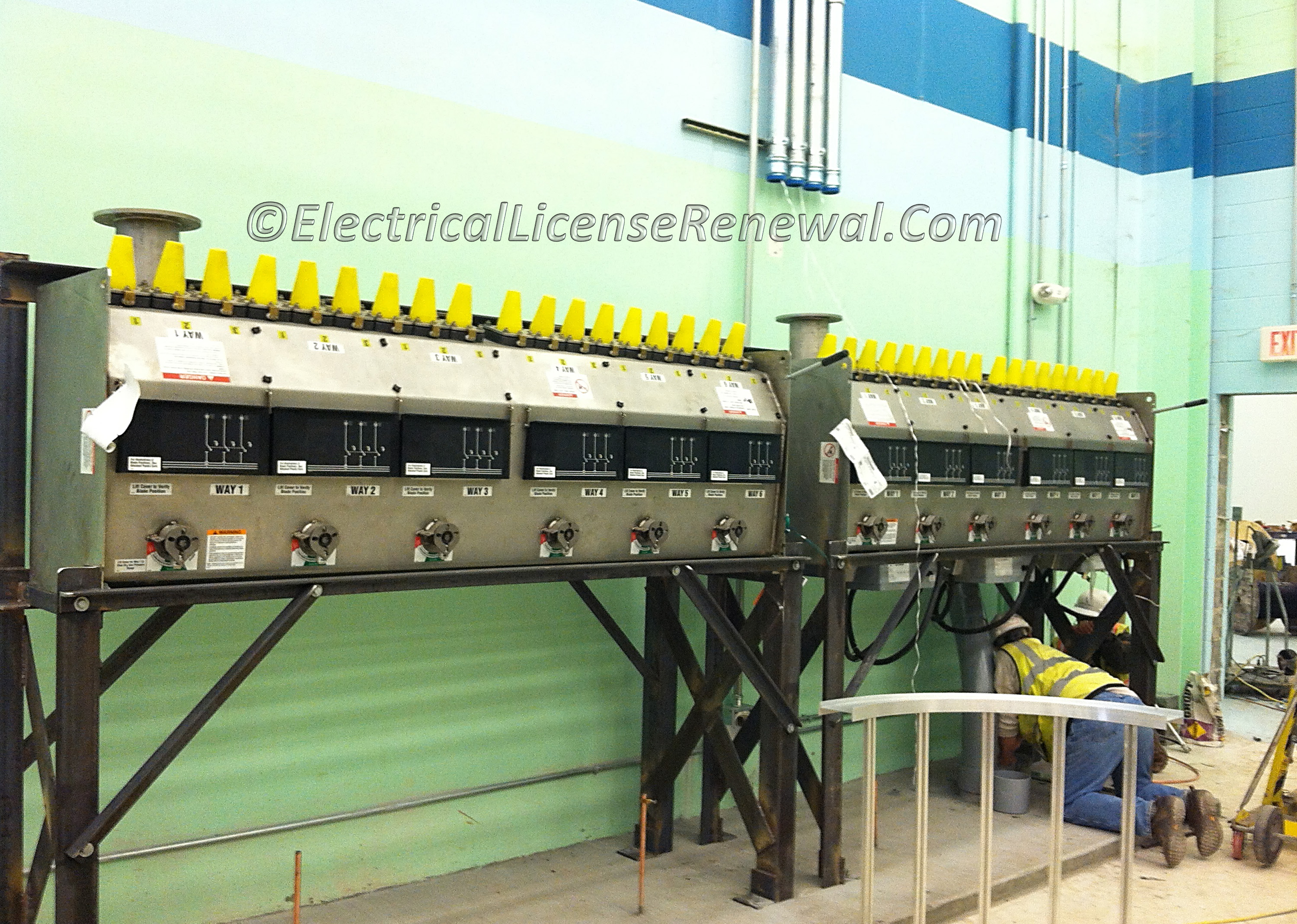
Code Change Summary: The previous code language in 250.186 was moved to 250.187 and now, 250.186 is all new code language addressing the required ground-fault current path for AC systems operating over 1000 volts.
Before this new code change there really was no supporting code language requiring a grounded conductor to be run to a grounded electrical service operating over 1000 volts. Section 250.186 now provides similar requirements to what is mentioned in section 250.24(C) for the grounding of electrical systems of 1000 volts or less. The new code language provides the rules on bringing a grounded conductor to the service disconnect for grounded electrical systems over 1000 volts.
Often, the loads connected to higher voltage services will not even use a grounded neutral conductor. Consider a 12,470-volt electrical service at a waste water treatment plant for example. Most of the loads connected to the electrical service will be 3-phase motor loads that do not use a grounded neutral conductor. Why then would a grounded conductor need to be run to the service enclosure?
The grounded conductor provides a low impedance ground fault return path back to the utility transformer in the event of a phase-to-ground fault condition. This enables the overcurrent device ahead of the faulted circuit to trip.
Section 250.186(A) applies to grounded electrical systems over 1000 volts. If a grounded conductor for these systems is provided at the service point (usually by the utility company), then a grounded conductor must also be installed and routed with the ungrounded conductors to the grounded terminal bar in each service disconnect. From there, a main bonding jumper connects the grounded conductor terminal bar to the service disconnect enclosure.
Section 250.186(B) applies when an AC system operates over 1000 volts and is grounded at any point but is NOT provided with a grounded conductor at the service point. In this case, a supply side bonding jumper must be installed and routed with the ungrounded conductors to each service disconnect enclosure and connected to the equipment grounding conductor terminal.
Below is a preview of the NEC®. See the actual NEC® text at NFPA.ORG for the complete code section. Once there, click on the “free access” tab and select the applicable year of NFPA 70 (National Electrical code).
2014 Code Language:
250.186 Ground-Fault Circuit Conductor Brought to Service Equipment.
(A) Systems with a Grounded Conductor at the Service Point. Where an ac system operating at over 1000 volts is grounded at any point and is provided with a grounded conductor at the service point, a grounded conductor(s) shall be installed and routed with the ungrounded conductors to each service disconnecting means and shall be connected to each disconnecting means grounded conductor(s) terminal or bus. A main bonding jumper shall connect the grounded conductor(s) to each service disconnecting means enclosure. The grounded conductor(s) shall be installed in accordance with 250.186(A)(1) through (A)(4). The size of the solidly grounded circuit conductor(s) shall be the larger of that determined by 250.184 or 250.186(A)(1) or (A)(2).
(B) Systems Without a Grounded Conductor at the Service Point. Where an ac system operating at greater than 1000 volts is grounded at any point and is not provided with a grounded conductor at the service point, a supply-side bonding jumper shall be installed and routed with the ungrounded conductors to each service disconnecting means and shall be connected to each disconnecting means equipment grounding conductor terminal or bus. The supply-side bonding jumper shall be installed in accordance with 250.186(B)(1) through (B)(3).