110.16 Arc-Flash Hazard Warning. Service Equipment and Feeder-Supplied Equipment.
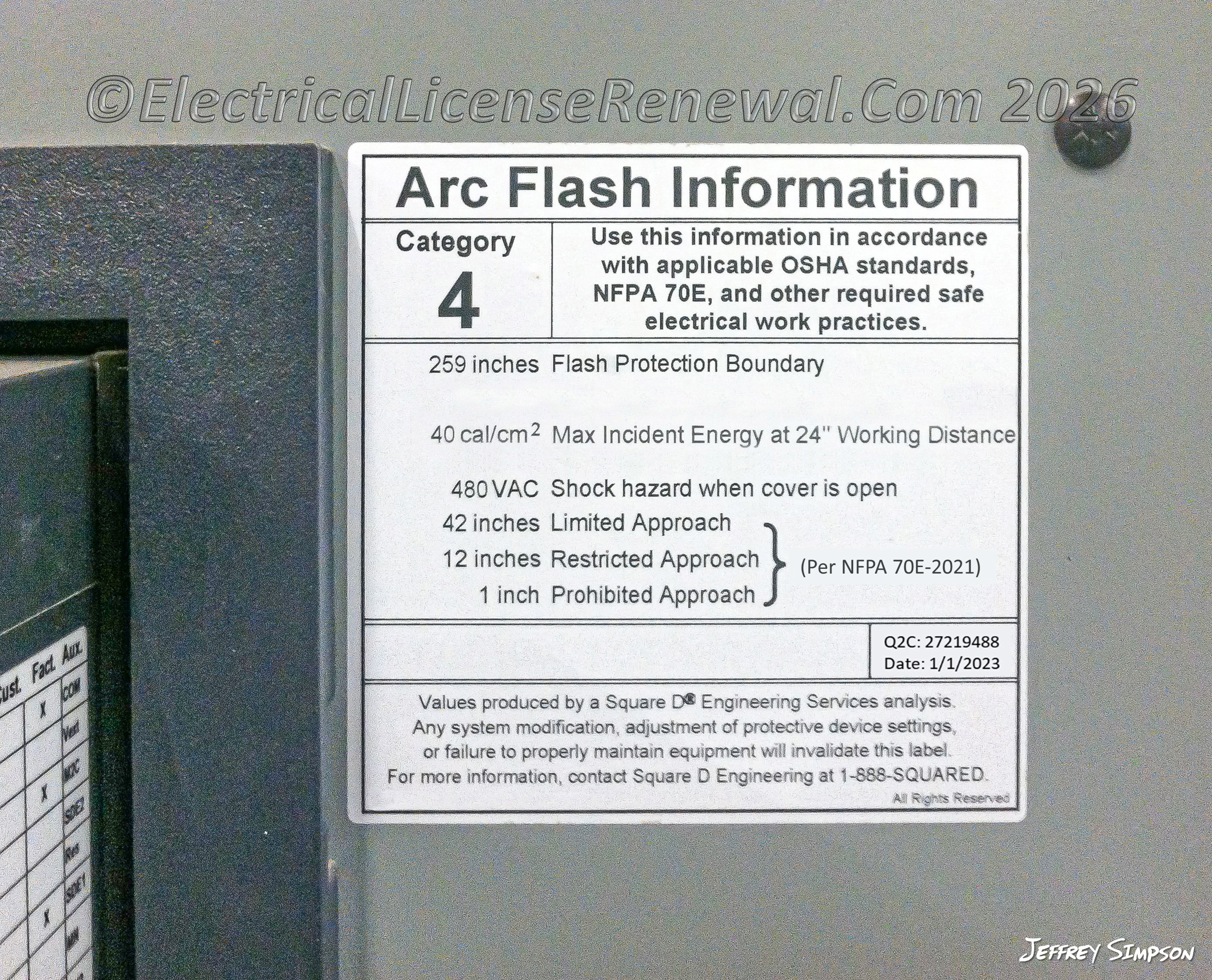
The marking requirements apply to service equipment and feeder-supplied equipment, at other than dwelling units, that are likely to require examination, adjustment, servicing, or maintenance while energized.
The labeling requirements in 110.16 really put the pressure on for electrician to step up their game. In other than dwelling units, service equipment and feeder-supplied equipment must be marked with certain items that can only be obtained by an electrician who has an understanding of overcurrent device trip characteristic and available fault current.
When service equipment or feeder-supplied equipment is installed at other than dwelling units, the following markings must be field or factory applied to the equipment:
- Nominal system voltage.
- The arc flash boundary.
- The available incident energy or minimum required level of personal protective equipment.
- The date the assessment was completed.
Item 1 above is no big deal. It is expected that the installing electrician will know the nominal system voltage for the equipment being installed.
Item 2 is new in 2026 and requires the arc-flash boundary to be marked.
Item 3 is also new in 2026 and requires marking of the available incident energy or minimum required level of personal protective equipment
Item 4 is no big deal. Just mark the date the label is installed. This helps to date stamp the installation should any changes occur in the future.
The NEC® stops short of prescribing how to determine values like the arc flash boundary and available incident energy or minimum required level of personal protective equipment. Those calculations require a documented arc-flash risk assessment (most likely done as outlined in NFPA 70E Article 130). This creates an interesting dynamic: while the NEC® now mandates that these values appear on the label, it doesn’t provide the methodology for determining them. Inspectors may now be in a position where they not only verify the presence of the label but also evaluate whether the data on it is backed by a legitimate risk assessment conducted in accordance with applicable industry practices.
Ultimately, the 2026 change to items 2, and 3 in this section brings increased uniformity to arc-flash labeling practices and gives electrical professionals a clear checklist. At the same time, it reinforces the Code’s reliance on industry consensus standards for critical safety calculations. The evolution of 110.16 continues to reflect a growing emphasis on electrical safety in energized work conditions and a continued effort to bridge the NEC® with NFPA 70E.
See the actual NEC® text at NFPA.ORG for the complete code section. Once there, click on the “free access” tab and select the applicable year of NFPA 70 (National Electrical code).
2026 Code Language:
110.16 Arc-Flash Hazard Marking.
In other than dwelling units, a permanent arc flash marking shall be field or factory applied to service equipment and feeder-supplied equipment, such as switchboards, switchgear, enclosed panelboards, industrial control panels, meter socket enclosures, and motor control centers that are likely to require examination, adjustment, servicing, or maintenance while energized. The marking shall comply with 110.21(B), be located so as to be clearly visible to qualified persons, and be in accordance with applicable industry practice, containing the following information:
(1) The nominal system voltage
(2) The arc flash boundary
(3) The available incident energy or minimum required level of personal protective equipment
(4) The date the assessment was completed
