430.132 GFCI and SPGFCI Between Power Conversion Equipment and Motors.
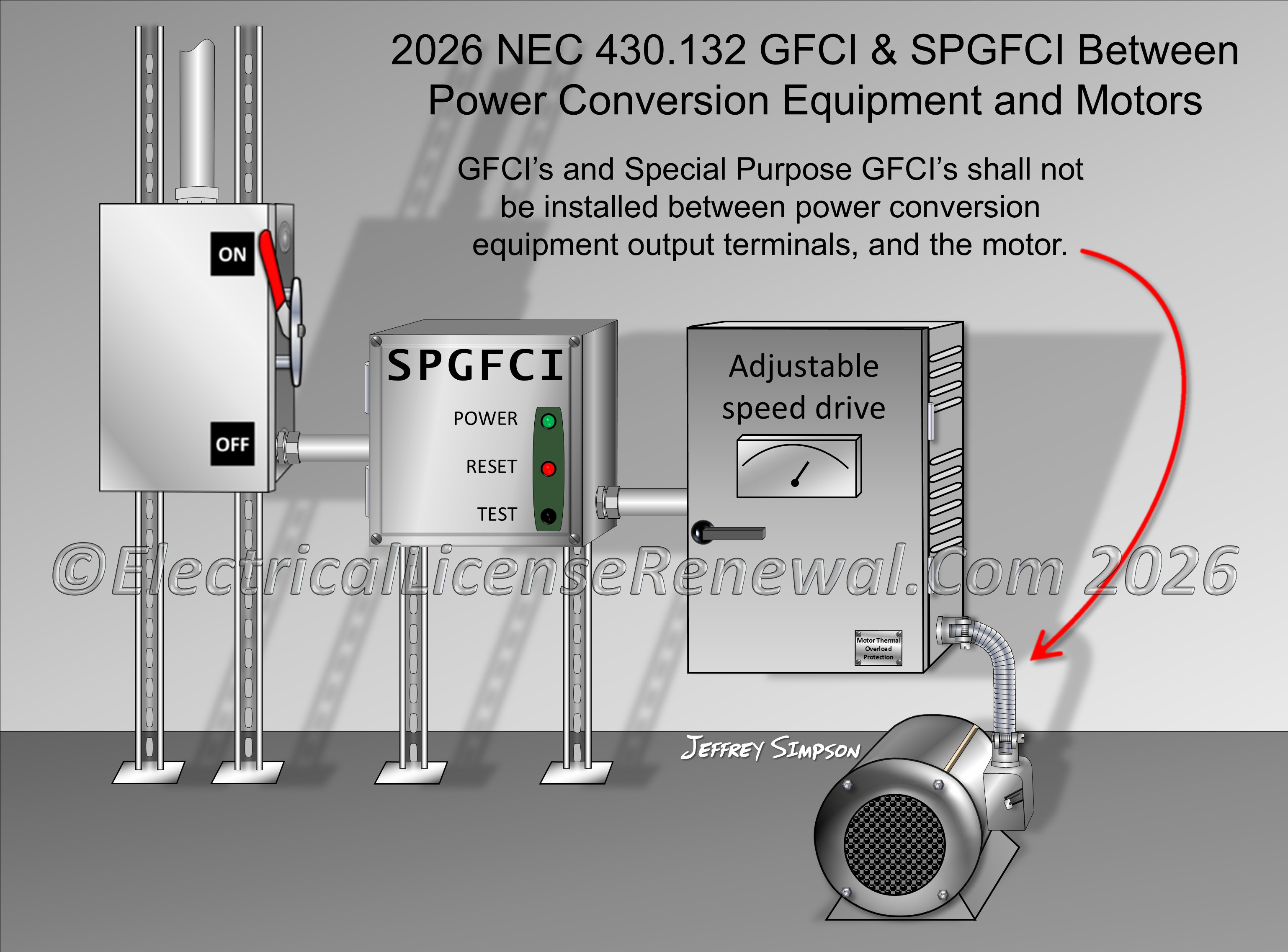
GFCI’s and Special Purpose GFCI’s shall not be installed between power conversion equipment output terminals, and the motor.
Code Change Summary: A new section prohibits installing GFCI or SPGFCI devices between power conversion equipment output terminals and a motor.
SME commentary: Section 430.132 was added to the 2026 NEC® as a Tentative Interim Amendment (TIA 26-3, Log No. 1843) shortly before publication. This late addition parallels TIA 1809 to Section 680.21(C) in the 2023 NEC®, both of which address operational incompatibility between ground-fault protective devices and the electrical output of variable-speed motor drives. The new rule in 430.132 is clear: “Ground-fault circuit interrupters and special purpose ground-fault circuit interrupters shall not be installed between power conversion equipment output terminals and the motor”.
Power conversion equipment includes devices such as variable frequency drives (VFDs), DC drives, inverters, and other electronic converters that modify voltage or frequency to regulate motor speed and torque. The output of these devices is not a pure sinusoidal waveform but a series of voltage pulses that can reach peak levels significantly higher than the RMS input voltage. This pulsed output often contains high harmonic content and steep voltage rise times that create a harsh electrical environment for equipment not designed to operate in such conditions.
When a GFCI or SPGFCI is installed between the drive and the motor, the non-sinusoidal waveform and rapid switching transients can cause nuisance tripping, excessive heating, and premature device failure. Moreover, devices not rated for these environments may experience thermal damage or insulation breakdown, creating a fire or shock hazard.
The intent of the new section is to ensure that GFCI and SPGFCI protection is applied only where it will function as designed. These devices should be installed on the input side of power conversion equipment where the current waveform is sinusoidal and within the device’s tested performance parameters. This distinction helps prevent false tripping, protects sensitive electronic components, and maintains consistent ground-fault protection where it is needed most.
This revision reinforces the broader industry understanding that adjustable-speed drives create unique electrical environments that require specially rated components. By prohibiting GFCI or SPGFCI devices between the power conversion equipment output and the motor, Section 430.132 promotes both equipment reliability and personnel safety.
Below is a preview of the NEC®. See the actual NEC® text at NFPA.ORG for the complete code section. Once there, click on their link to free access to the 2026 NEC® edition of NFPA 70.
2023 Code Language:
This code section did not exist.
2026 Code Language:
N 430.132 GFCI and SPGFCI Between Power Conversion Equipment and Motors. Ground-fault circuit interrupters and special purpose ground-fault circuit interrupters shall not be installed between power conversion equipment output terminals and the motor.
