250.64(G) Enclosures with Ventilation, Mounting, or Drainage Openings.
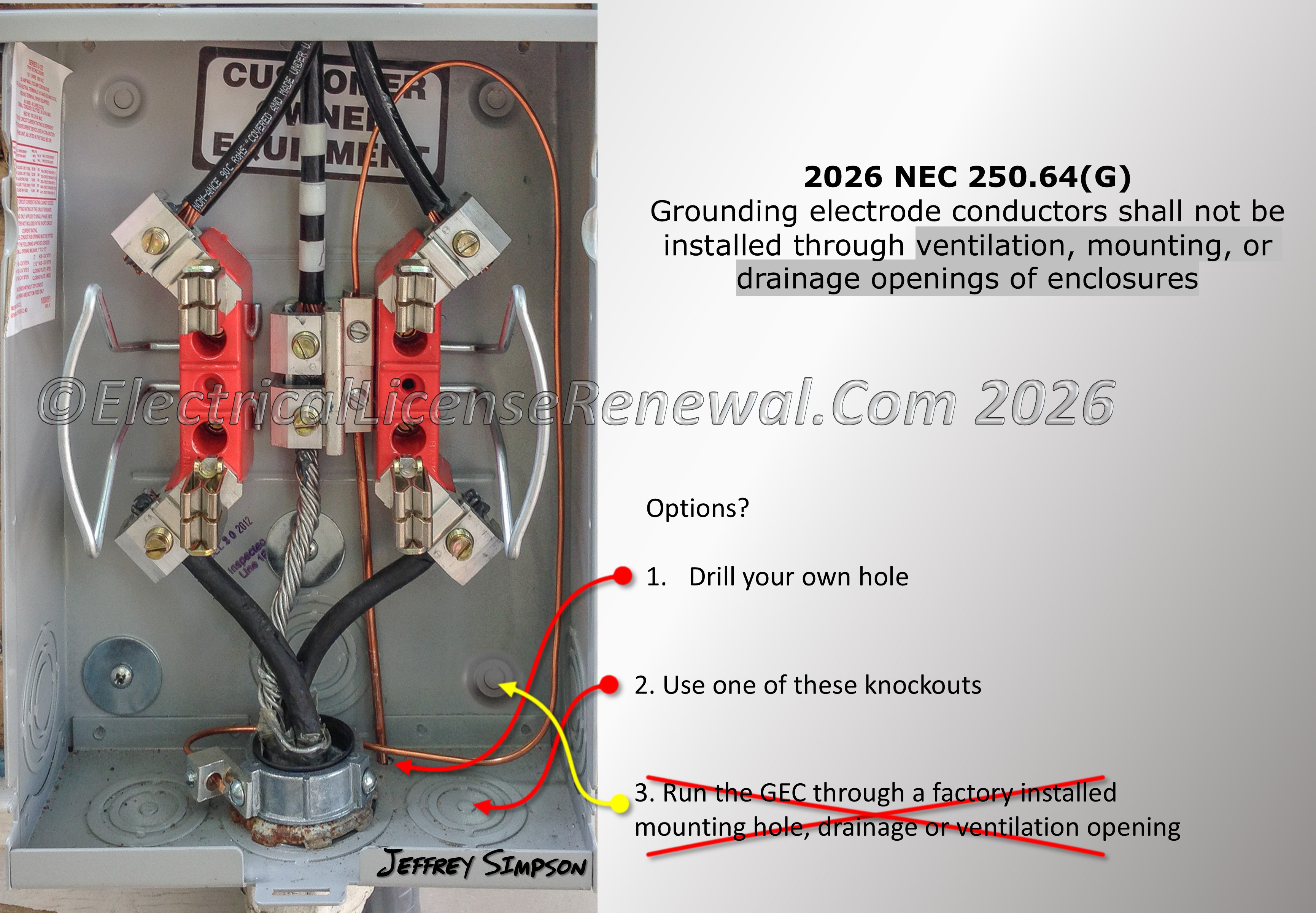
There are still a few options to run the GEC into the enclosure.
Code Change Summary: Section 250.64(G) was revised to prohibit routing grounding electrode conductors through drainage, mounting, or ventilation openings.
SME commentary: The 2026 NEC® includes an important refinement in Section 250.64(G) that directly affects how grounding electrode conductors (GECs) are routed into enclosures. The revised language now explicitly prohibits installers from running a GEC through drainage, mounting, or ventilation openings. This change addresses an existing installation practice that has raised questions on acceptable installation methods. When GECs are passed through these factory openings, it can compromise the intended purpose of the opening.
The practical outcome of this revision is that electricians can no longer “sneak” a GEC through any unused hole or slot already present in the enclosure. Instead, the installer will now be required to either use a knockout or drill a hole for the conductor. This seemingly small adjustment elevates both workmanship and safety by reducing the risk of chafing, corrosion, or unintended pathways for moisture.
Naturally, this revision raises the next logical question: if an installer makes a new hole or uses an available knockout, must that opening be fitted with a listed connector or fitting when only a small grounding electrode conductor is being passed through? The answer, confirmed by the Code-Making Panel’s deliberations over this code section and also failed public inputs to modify 250.64(B), is no. The Code does not require a fitting in this application. Section 250.64(G) addresses the pathway prohibition but does not establish a mandate for requiring listed fittings on GECs. This distinction is intentional and was reinforced through discussion and public comments during the code development process.
The basis for this conclusion lies in the established treatment of GECs within Article 250. The NEC® has historically allowed GECs to enter or exit enclosures without requiring a listed fitting. Many inspectors already accept this practice, but the 2026 change provides added clarity by closing the loophole that previously allowed routing through unsuitable openings.
This clarification benefits the field in two important ways. First, the revised text ensures that ventilation and drainage functions of enclosures are preserved, maintaining equipment longevity and safety. Second, the absence of any positive language in this section and 250.64(B) requiring a fitting reaffirms that installers are not burdened with an unnecessary requirement to purchase and install fittings that the Code does not specifically require for GECs. Electricians can confidently drill a properly sized hole, (located appropriately), and route the conductor without concern that they are missing a required listed connector.
The 2026 revision to 250.64(G) improves installation integrity by prohibiting the use of improper factory openings, while also preserving clarity that fittings are not required for grounding electrode conductors. This change provides much-needed direction to both inspectors and installers, ensuring consistent enforcement and safer, more professional installations.
Below is a preview of the NEC®. See the actual NEC® text at NFPA.ORG for the complete code section. Once there, click on their link to free access to the 2026 NEC® edition of NFPA 70.
2023 Code Language:
250.64(G) Enclosures with Ventilation Openings. Grounding electrode conductors shall not be installed through a ventilation opening of an enclosure.
2026 Code Language:
250.64(G) Enclosures with Ventilation, Mounting, or Drainage Openings. Grounding electrode conductors shall not be installed through ventilation, mounting, or drainage openings of enclosures.
