210.12(E) Branch Circuit Wiring Extensions, Modifications, or Replacements.
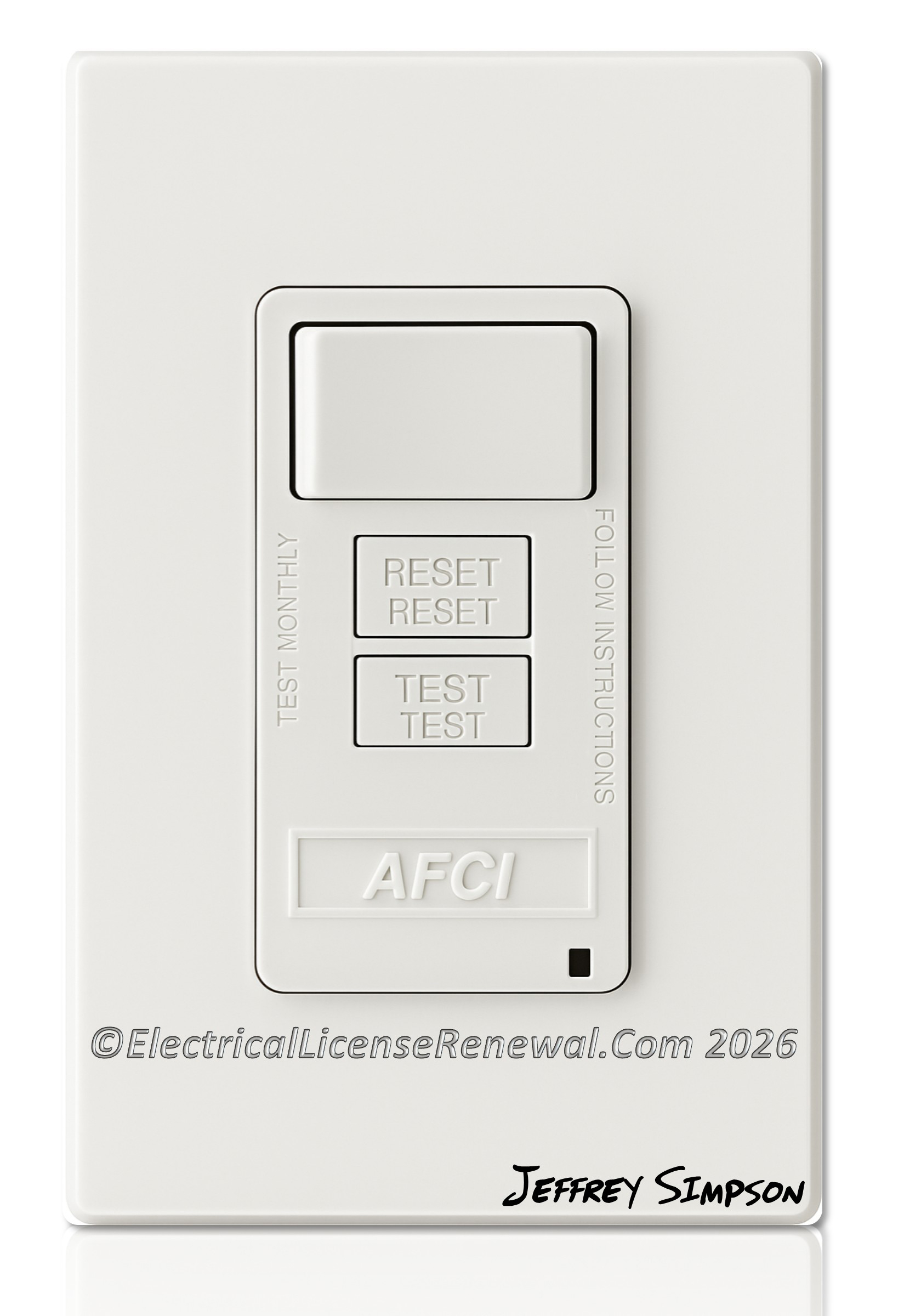
NEC 210.12(E)(2) now permits a listed outlet branch-circuit-type AFCI device to be installed not only at the first receptacle outlet of the existing branch circuit, but also at the first switch.
Code Change Summary: AFCI type switching devices can now be used where branch circuit extensions, modifications, or replacements are made.
SME commentary: In the 2026 National Electrical Code (NEC), Section 210.12(E) was revised to broaden the options for compliance when arc-fault circuit-interrupter (AFCI) protection is required for branch circuit extensions, modifications, or replacements. The updated language now permits a listed outlet branch-circuit-type AFCI device to be installed not only at the first receptacle outlet of the existing branch circuit but also at the first switch:
210.12(E)(2) “A listed outlet branch-circuit-type AFCI located at the first receptacle outlet or switch of the existing branch circuit”.
This small wording change (adding “or switch” to the requirement) has meaningful implications for design flexibility and installation practices. In the 2023 NEC®, AFCI protection could be provided using one of the methods in 210.12(A)(1) through (A)(6), or by installing a listed branch-circuit-type AFCI device at the first receptacle outlet of the existing circuit. However, that provision was limited in cases where the circuit may not include a receptacle early in the branch layout or where it may be more practical or economical to place the AFCI protection at a switch device.
This change aligns the NEC® with emerging product technology. Listed AFCI/switch combination devices are currently available and specifically designed to offer the same protection capabilities as receptacle outlet-style AFCIs while also functioning as traditional switches. These devices detect both parallel and series arc faults, provide feed-through protection to downstream devices, and are listed for this application. They feature onboard TEST and RESET buttons similar to those found on GFCIs and meet the same tripping time requirements established by UL 1699 for series and parallel arcing.
The revision supports safer installations by eliminating unnecessary constraints on where AFCI protection may be initiated. Installers now have greater flexibility to locate the AFCI device at the most appropriate point in the circuit layout, whether that is a receptacle or a switch. The change also resolves previous ambiguity about the acceptability of AFCI switches, which are increasingly used in renovations, lighting circuits, or control locations where a receptacle may not be present.
This revision promotes the use of listed products already available on the market and helps keep the Code consistent with real-world installation conditions. It also encourages broader adoption of AFCI technology by providing additional compliance paths that reflect modern construction practices. Ultimately, the added clarity supports both safety and practicality for installers and inspectors working on modified branch circuits.
Below is a preview of the NEC®. See the actual NEC® text at NFPA.ORG for the complete code section. Once there, click on their link to free access to the 2026 NEC® edition of NFPA 70.
2023 Code Language:
210.12(E) Branch Circuit Wiring Extensions, Modifications, or Replacements. If branch-circuit wiring for any of the areas specified in 210.12(B), (C), or (D) is modified, replaced, or extended, the branch circuit shall be protected by one of the following:
(1) By any of the means described in 210.12(A)(1) through (A)(6)
(2) A listed outlet branch-circuit-type AFCI located at the first receptacle outlet of the existing branch circuit
See exception…
2026 Code Language:
210.12(E) Branch Circuit Wiring Extensions, Modifications, or Replacements. If branch-circuit wiring for any of the areas specified in 210.12(B), 210.12(C), or 210.12(D) is modified, replaced, or extended, the branch circuit shall be protected by one of the following:
(1) By any of the means described in 210.12(A)
(2) A listed outlet branch-circuit-type AFCI located at the first receptacle outlet or switch of the existing branch circuit
See exception…
