210.12(C) AFCI Protection at Dormitories.
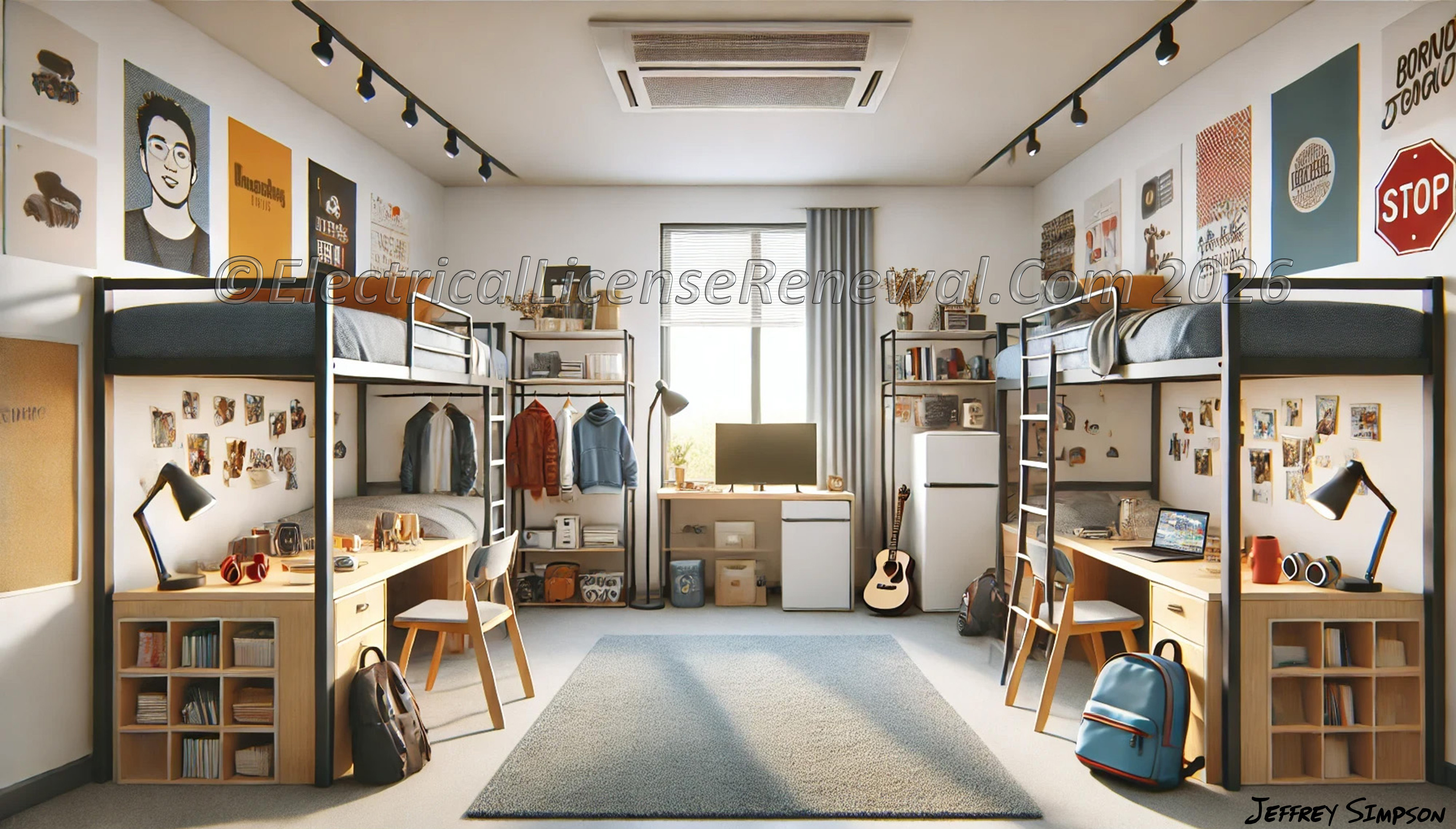
All 120-volt, single-phase, 10-, 15-, and 20-ampere branch circuits supplying outlets or devices installed in specific areas or rooms of dormitories require AFCI protection.
Code Change Summary: The heading in 210.12(C) was revised in the 2026 NEC® to use the term “Dormitories” in alignment with the updated Article 100 definition.
SME commentary: The 2026 NEC® brings an important clarification to Section 210.12(C) by updating the section title from "Dormitory Units" to simply "Dormitories." This change might appear minor at first glance, but it corrects a persistent misunderstanding caused by the way the term “dormitory unit” was interpreted in previous editions of the Code.
The 2023 NEC® used the phrase “Dormitory Unit,” which many field professionals interpreted as referring only to an individual room or unit that houses up to 16 people (in accordance with the Article 100 definition). This interpretation led some to believe that protection requirements for AFCI and GFCI only applied to dormitory units that exceeded 16 occupants, leaving many typical dorm rooms seemingly exempt. As a result, spaces like bedrooms, living areas, closets, and hallways inside dormitory buildings were often overlooked for AFCI and GFCI protection when they clearly should not have been.
To address this confusion, the 2026 NEC® not only revised the Article 100 definition by replacing "Dormitory Unit" with “Dormitory,” but also added a new informational note. That note clarifies that individual rooms within dormitories are treated as “guest rooms” or “guest suites” under the NEC®. These spaces are subject to the same protection requirements as similar residential rooms.
The revised heading in 210.12(C) now directly reflects this change. By stating “Dormitories,” the NEC® makes it clear that the required protections apply to all applicable areas within the dormitory building, not just those rooms that meet a numerical threshold of occupants. This aligns with the NFPA 101 Life Safety Code and eliminates the ambiguity between codes that has caused enforcement inconsistencies.
This change is especially important in educational institutions, military housing, and group living facilities where individual rooms are often wired like small apartments or bedrooms. Now, there is no question: if a dormitory room includes sleeping or living accommodations, it must comply with the applicable branch circuit protection requirements in 210.12(A).
For electricians, the takeaway is straightforward: even a single sleeping room in a dormitory building, whether it houses one student or multiple, requires AFCI and GFCI protection in the same way any residential bedroom or living space does. The updated heading in 210.12(C) ensures consistency, clarity, and ultimately, safer installations.
Below is a preview of the NEC®. See the actual NEC® text at NFPA.ORG for the complete code section. Once there, click on their link to free access to the 2026 NEC® edition of NFPA 70.
2023 Code Language:
210.12(C) Dormitory Units. All 120-volt, single-phase, 10-, 15-, and 20-ampere branch circuits supplying outlets or devices installed in the following locations shall be protected by any of the means described in 210.12(A)(1) through (A)(6):
Bedrooms, Living rooms, Hallways, Closets, Bathrooms, Similar rooms
2026 Code Language:
210.12(C) Dormitories. All 120-volt, nominal, single-phase, 10-, 15-, and 20-ampere branch circuits supplying outlets or devices installed in the following locations shall be protected by any of the means described in 210.12(A).
Bedrooms, Living rooms, Hallways, Closets, Bathrooms, Similar rooms
