Article 100 Definitions. Wiring Device.
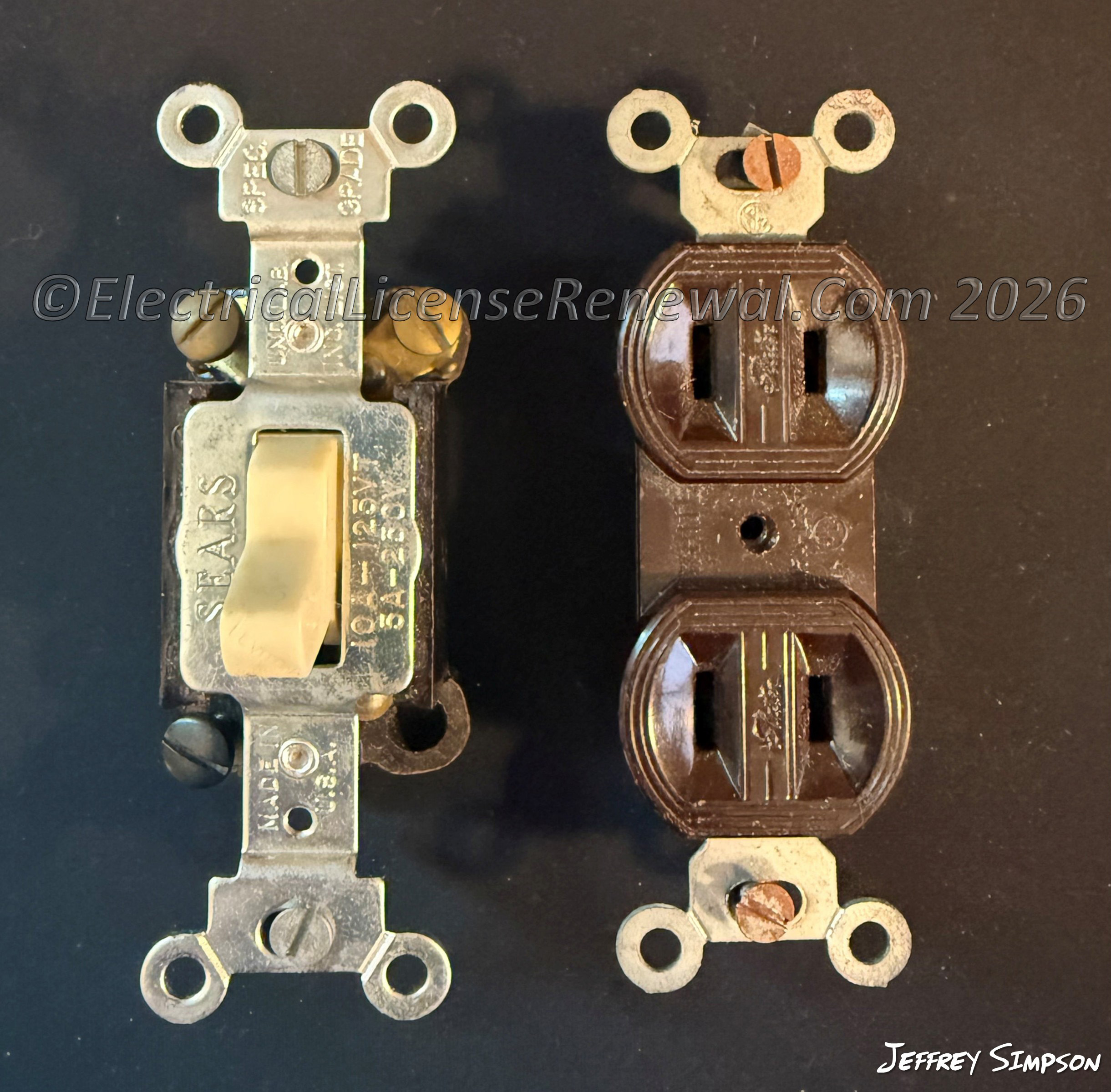
Types of ancient “wiring devices”.
Code Change Summary: New definition of a “Wiring Device”.
SME commentary: In the 2026 NEC®, a new definition of a “Wiring Device” was added to Article 100 in addition to an informational note providing examples of what constitutes a wiring device.
A Wiring Device is “an electrical device with a yoke or used with flexible cord or cable that serves as either a connection point to facilitate the flow of current or as a control device in general distribution and branch circuits”.
“Informational Note: Examples of wiring devices include attachment plugs, receptacles, general-use snap switches, pendant switches, surface switches, dimmers, and electronic control switches and lighting control switches”.
This addition was prompted by significant structural changes made to Articles 404 and 406 during the 2026 code cycle. Previously, Article 404 addressed switches, switching devices, and circuit breakers used as switches for systems operating at 1000 volts or less, unless otherwise specified in the Code. However, in the 2026 NEC®, Article 404 has been refined to focus exclusively on general-use switches, motor-circuit switches, isolating switches, circuit breakers used as switches, and molded case switches.
As a result of this narrowed focus, several devices that were formerly part of Article 404, such as snap switches, surface switches, dimmers, and electronic control switches, have now been relocated to Article 406. In conjunction with this move, Article 406 has been renamed from “Receptacles, Cord Connectors, and Attachment Plugs (Caps)” to simply “Wiring Devices.” This updated title reflects the broader range of components it now governs and aligns with the way these devices are typically installed. Like receptacles, many of these switches and control devices are installed in outlet boxes and secured with mounting straps or yokes, making this organizational shift both logical and practical.
The decision to define “Wiring Device” and revise the article structure was also influenced by the alignment with NFPA 70B, the Standard for Electrical Equipment Maintenance. That standard already organizes its content with “Switches” in Chapter 17 and “Wiring Devices” in Chapter 24. The NEC® changes now mirror that distinction, creating consistency across NFPA codes and standards.
Careful wording was selected within the new definition to ensure comprehensive coverage. The phrase “with a yoke” reflects the physical structure common to many wiring devices, such as receptacles and switches. The inclusion of “or used with flexible cord or cable” ensures that devices like attachment plugs, cord connectors, and pendant switches, many of which do not have a yoke, are still accurately captured within the scope of the definition.
These changes provide much-needed clarity, improve usability, and ensure that wiring devices are addressed under the most appropriate article of the NEC®, all while maintaining alignment with other relevant safety standards.
Below is a preview of the NEC®. See the actual NEC® text at NFPA.ORG for the complete code section. Once there, click on their link to free access to the 2026 NEC® edition of NFPA 70.
2023 Code Language:
The definition did not exist.
2026 Code Language:
N Wiring Device. An electrical device with a yoke or used with flexible cord or cable that serves as either a connection point to facilitate the flow of current or as a control device in general distribution and branch circuits.
Informational Note: Examples of wiring devices include attachment plugs, receptacles, general-use snap switches, pendant switches, surface switches, dimmers, and electronic control switches and lighting control switches.
