Article 100 Definitions. Power Control System (PCS).
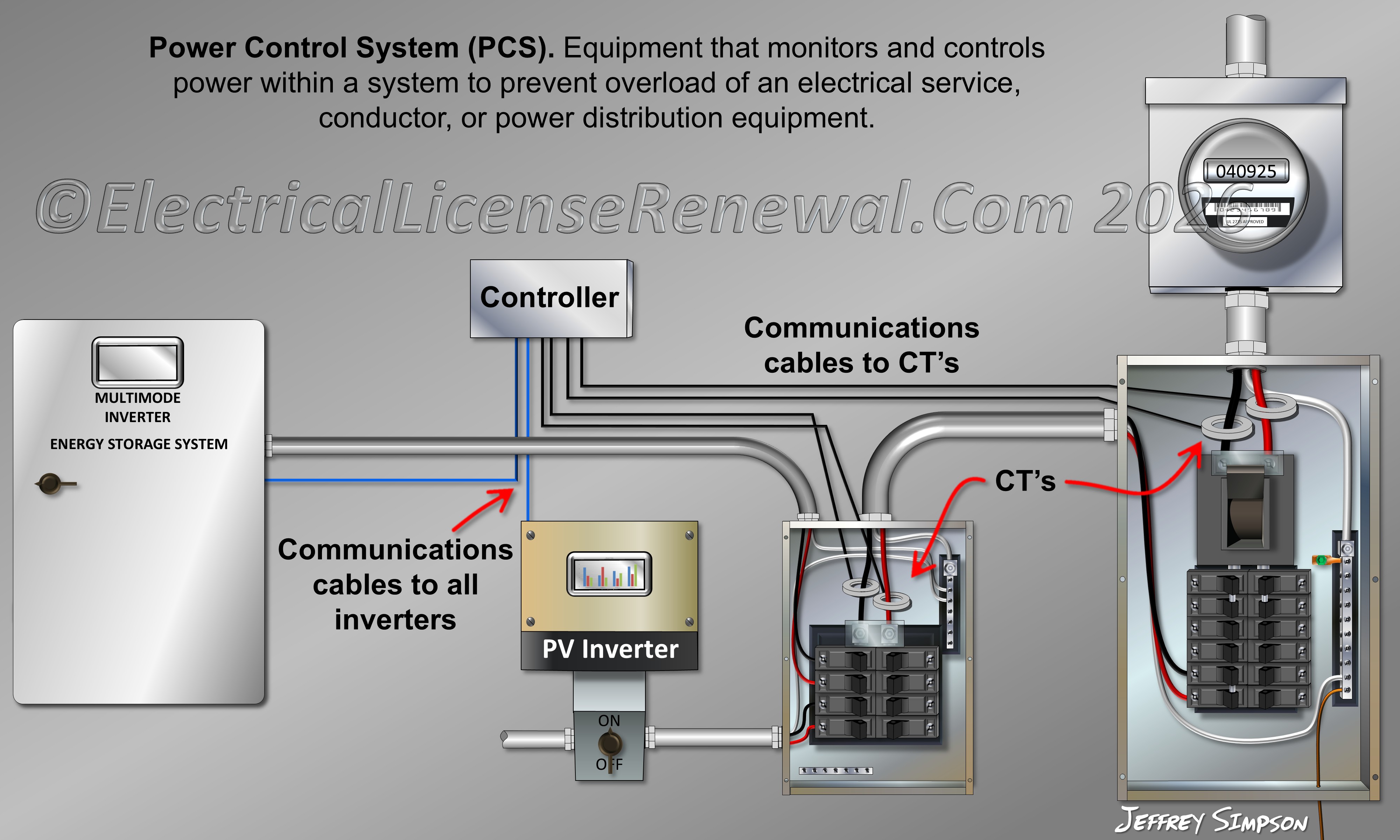
A PCS can monitor and control power within a system to prevent overload of an electrical service, conductor, or power distribution equipment.
Code Change Summary: New definition of a Power Control System (PCS).
SME commentary: The 2026 NEC® introduces a new definition in Article 100 for Power Control System (PCS), a much-needed term that reflects the growing complexity of modern power systems. This definition, while simple on its surface, is a direct response to major shifts in how energy can be monitored and controlled in today’s premises wiring systems.
The new Article 100 definition reads:
Power Control System (PCS). Equipment that monitors and controls power within a system to prevent overload of an electrical service, conductor, or power distribution equipment.
Supporting sub-definitions were also added:
Power Control System, Multisource. (Multisource Power Control System) (Multisource PCS). A type of PCS with capability to control power production sources, with or without load management.
Power Control System, Single-Source. (Single-Source Power Control System) (Single-Source PCS). A type of PCS with capability for load management only.
This new terminology started as a Public Input (initially denied at first draft) during the 2026 NEC® cycle. Public Input (PI) 4331 originally proposed the term “Power Circuit Management (PCM).” The goal behind PI 4331 was to draw a clear distinction between traditional Energy Management Systems (EMS) and a newer class of systems designed with functional reliability in mind, specifically for preventing electrical overloads. The original submission rightly pointed out that EMS equipment, as defined in earlier Code cycles, was typically used to optimize energy use for things like lighting, HVAC systems, or timed load shedding. However, EMS devices were never intended or evaluated to provide system-critical overload protection.
As energy systems across residential, commercial, and industrial installations evolve, this gap in terminology, and more importantly, in application and safety expectations had to be addressed. The rise of electric vehicles, energy storage, distributed generation, and all-electric appliances is placing unprecedented demand on existing infrastructure. Utilities and installers alike are finding themselves forced to manage more power across systems that were never designed for this level of complexity. This leads to a greater risk of overloads, both on the premises wiring and the utility service equipment feeding those installations.
The solution? Power Control Systems are now available that specifically monitor and control power to prevent overload situations. PCS equipment can manage generation, loads, and distribution pathways in a way that provides a safety backstop to traditional circuit protection. This functionality may include disconnecting or shedding loads when necessary, balancing energy sources, or rerouting power within the system. While it may work alongside EMS devices, the PCS goes a step further: it is designed and expected to prevent overloads and protect infrastructure.
It's worth noting that the term “Power Circuit Management” as proposed in PI 4331 was rejected, not because the concept lacked merit, but because the term wasn’t yet used elsewhere in the Code. Instead, the core idea behind PCM was reworked into the term Power Control System, which better correlates with Part II of Article 750, now relocated to new Article 130 in the 2026 NEC®.
By defining PCS in Article 100, the NEC® now recognizes these systems as distinct, critical components of modern electrical infrastructure. This allows future code rules to reference PCS technology directly, especially when overload prevention is required for compliance. It also sends a clear message to the industry: as power demands grow and systems become smarter, so must the Code and the devices it governs.
In practical terms, inspectors and installers should watch for increasing use of PCS equipment in new construction, especially in buildings with EV chargers, energy storage, rooftop solar, or load-flexible appliances. These systems will be essential for managing load diversity and ensuring that aging service equipment is not pushed past its limits.
While EMS systems will continue to serve their role in energy optimization, the PCS is now officially recognized as the safety-focused overload control system needed for tomorrow’s electrical infrastructure.
Below is a preview of the NEC®. See the actual NEC® text at NFPA.ORG for the complete code section. Once there, click on their link to free access to the 2026 NEC® edition of NFPA 70.
2023 Code Language:
Article 100 Definitions.
The definitions did not exist.
2026 Code Language:
Article 100 Definitions.
N Power Control System (PCS). Equipment that monitors and controls power within a system to prevent overload of an electrical service, conductor, or power distribution equipment.
N Power Control System, Multisource. (Multisource Power Control System) (Multisource PCS). A type of PCS with capability to control power production sources, with or without load management.
N Power Control System, Single-Source. (Single-Source Power Control System) (Single-Source PCS). A type of PCS with capability for load management only.
