Article 100 Definitions. Pool
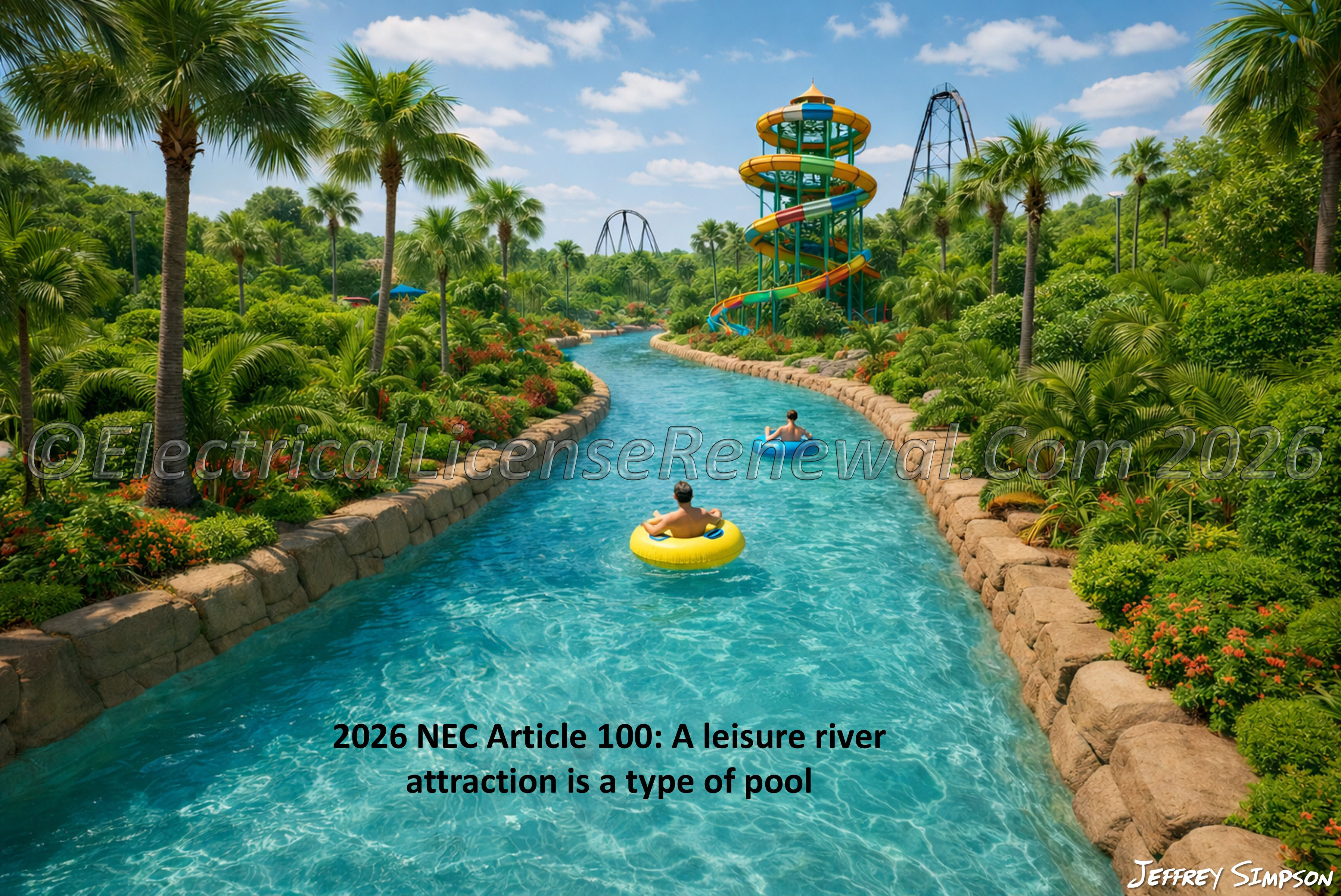
A leisure river attraction is a type of pool.
Code Change Summary: Revised definition of a “Pool”.
SME commentary: The 2026 NEC® brings changes to the definition of the term “Pool” in Article 100. While the changes may appear subtle at first glance, they carry significant implications for contractors, inspectors, and designers working with aquatic installations. This update continues the Code’s ongoing effort to distinguish which bodies of water fall under the scope of Article 680, and which do not.
In the 2023 NEC®, a “pool” was defined as manufactured or field-constructed equipment designed to contain water on a permanent or semipermanent basis, used by people for swimming, wading, immersion, or therapeutic purposes. This definition also excluded bodies of water such as surf parks, lakes, lagoons, and industrial process water features. An informational note pointed users to Article 682 for natural and man-made bodies of water.
Fast forward to the 2026 NEC®, and this definition has been revised to improve clarity and usability:
“Pool. Manufactured or field-constructed equipment designed to contain water and intended for use by persons for swimming, wading, immersion, recreational, or therapeutic purposes. (680)
Informational Note No. 1: A leisure river attraction is a type of pool.
Informational Note No. 2: Bodies of water incorporated as part of an industrial process, lakes, lagoons, surf parks, or other natural and artificially made bodies of water that could incorporate swimming and swimming areas are not pools. Natural and artificially made bodies of water, which includes lakes, lagoons, surf parks, or other similar bodies of water, are addressed in Article 682.”
The terms “permanent” and “semipermanent” have been removed altogether. The committee recognized that how long a pool is intended to remain in place is irrelevant to the functional definition of a pool. Whether the pool is inflatable and only used for a few weeks, or part of a concrete installation intended to last decades, it can still present the same electrical hazards. Therefore, duration no longer defines applicability.
The phrase “used by persons for swimming, wading, immersion, or therapeutic purposes” was broadened by adding “recreational” to capture a wider range of intended uses. This simple addition removes the gray areas for cases like splash pads and interactive water play features that do not fall into traditional use categories but still demand Article 680 safety considerations.
A significant structural change was also made to the definition. Exclusions, which were previously embedded in the main body of the definition, have now been pulled out and placed into Informational Note No. 2. This makes the definition more concise while still giving users essential context. Bodies of water associated with industrial processes, lakes, lagoons, surf parks, and other natural or artificially made water features that might include swimming areas are still not considered pools. These remain within the jurisdiction of Article 682.
The revision also replaced “man-made” with “artificially made” to align with other NEC® terminology. This type of harmonization helps reduce confusion and makes the NEC® more consistent with related standards.
Finally, text added to the informational notes makes it clear that a “leisure river attraction” is indeed considered a pool under the NEC®. While many in the industry have long referred to these installations as “lazy rivers,” the code now uses the more standardized term “leisure river” to stay consistent with other recognized codes like the ISPSC (International Swimming Pool and Spa Code).
A leisure river attraction typically includes circulating water, a guided current, and user participation. Clarifying that a leisure river is a type of pool points the code user to the requirements in Article 680 for code compliance. These features often include underwater lighting, pumps, motors, and bonding systems, all of which present potential electrical hazards if not properly addressed.
By updating the language and restructuring the definition, the NEC® improves usability while maintaining safety.
Below is a preview of the NEC®. See the actual NEC® text at NFPA.ORG for the complete code section. Once there, click on their link to free access to the 2026 NEC® edition of NFPA 70.
2023 Code Language:
Article 100 Definitions.
Pool. Manufactured or field-constructed equipment designed to contain water on a permanent or semipermanent basis and used by persons for swimming, wading, immersion, or therapeutic purposes, but not including bodies of water incorporated as part of an industrial process or lakes, lagoons, surf parks, or other natural and man-made bodies of water that may incorporate swimming and swimming areas. (680)
Informational Note: Natural and man-made bodies of water, which includes lakes, lagoons, surf parks, or other similar bodies of water, are addressed in Article 682.
2026 Code Language:
Article 100 Definitions.
Pool. Manufactured or field-constructed equipment designed to contain water and intended for use by persons for swimming, wading, immersion, recreational, or therapeutic purposes. (680)
Informational Note No. 1: A leisure river attraction is a type of pool.
Informational Note No. 2: Bodies of water incorporated as part of an industrial process, lakes, lagoons, surf parks, or other natural and artificially made bodies of water that could incorporate swimming and swimming areas are not pools. Natural and artificially made bodies of water, which includes lakes, lagoons, surf parks, or other similar bodies of water, are addressed in Article 682.
.
