Article 100 Definitions. Limited-Energy System.
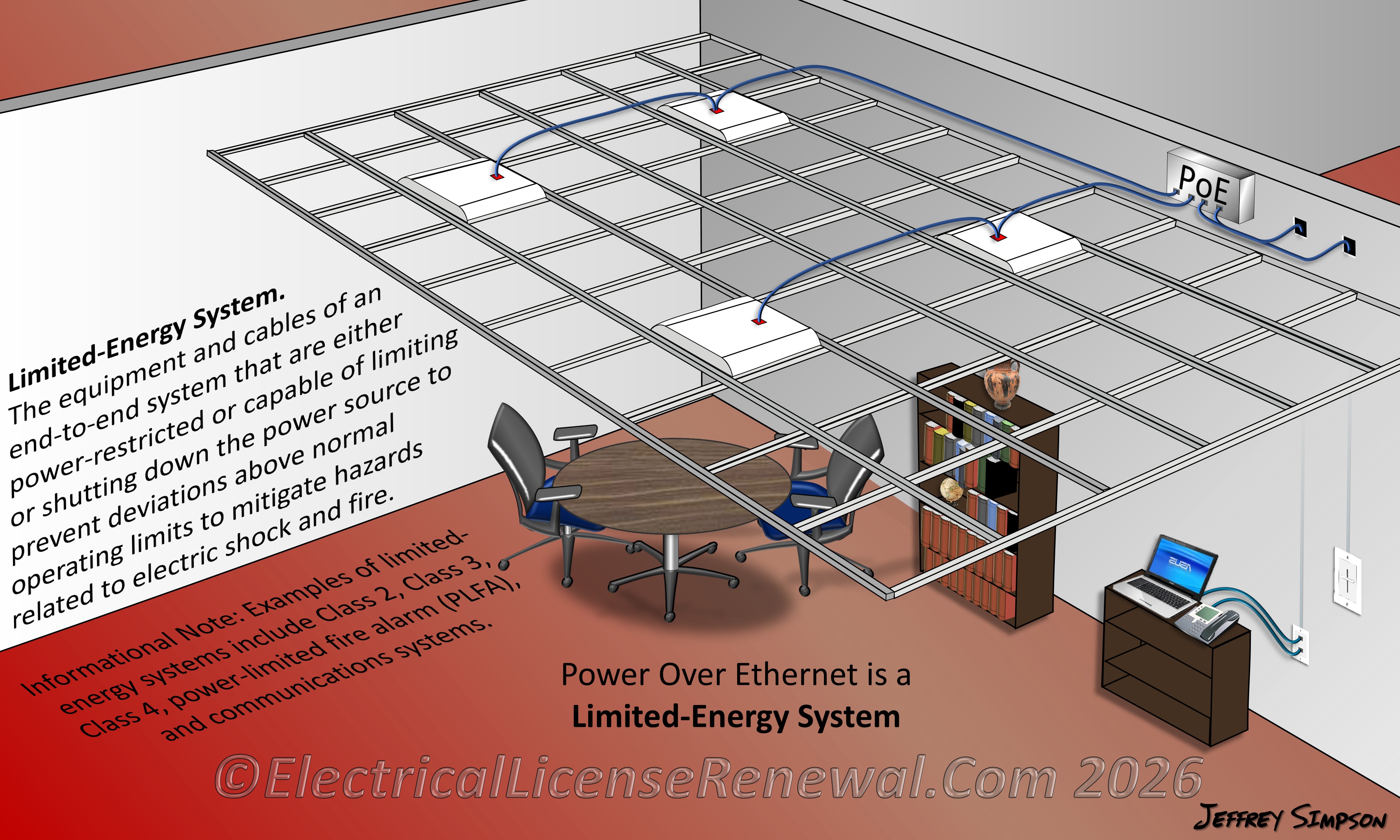
Examples of limited-energy systems include Class 2, Class 3, Class 4, power-limited fire alarm (PLFA), and communications systems.
Code Change Summary: New Article 100 definition of a Limited-Energy System.
SME commentary: In the 2026 NEC®, a new term was officially added to Article 100: Limited-Energy System. This definition is a direct response to the evolving technology landscape and the need for better organization and clarity within the NEC®, especially when it comes to low-power and communication-based systems. For years, Code users have juggled scattered requirements across Chapter 7 and Chapter 8, but with new types of systems emerging and overlap increasing, the need for a unifying definition became clear.
The newly added definition of a Limited-Energy System is: “The equipment and cables of an end-to-end system that are either power-restricted or capable of limiting or shutting down the power source to prevent deviations above normal operating limits to mitigate hazards related to electric shock and fire.”
An Informational Note expands on this by listing common examples: Class 2, Class 3, Class 4, power-limited fire alarm (PLFA), and communications systems.
This change originated from a task group specifically focused on modernizing Chapter 7 and Chapter 8. Their goal was to increase usability and make the NEC® easier to navigate, especially for installers and inspectors working with rapidly advancing limited-energy technologies.
By creating this new definition, the NEC® now gives a name and scope to an entire class of systems that have historically existed in somewhat of a gray area. These systems may operate at lower voltages, but the risk of electric shock and fire still exists if power levels exceed safe thresholds. The key is that these systems are either inherently power-limited or designed to shut down or restrict power output if conditions become unsafe.
This definition also sets the stage for future improvements to how the NEC® handles low-voltage systems. Instead of jumping between Class 2, PLFA, and communication requirements, users can now start with a common baseline: is it a Limited-Energy System? If so, the applicable rules are easier to identify and apply.
Bottom line:
The 2026 NEC® introduces a much-needed umbrella term with Limited-Energy System, giving a proper home in Article 100 for systems that are designed to restrict or shut down power for safety. It reflects a modern Code built for modern technology. For those working with low-voltage, power-limited, or communication systems, this new definition brings clarity, consistency, and a solid foundation for future code evolution.
Below is a preview of the NEC®. See the actual NEC® text at NFPA.ORG for the complete code section. Once there, click on their link to free access to the 2026 NEC® edition of NFPA 70.
2023 Code Language:
Article 100 Definitions.
This definition did not exist.
2026 Code Language:
Article 100 Definitions.
N Limited-Energy System. The equipment and cables of an end-to-end system that are either power-restricted or capable of limiting or shutting down the power source to prevent deviations above normal operating limits to mitigate hazards related to electric shock and fire.
Informational Note: Examples of limited-energy systems include Class 2, Class 3, Class 4, power-limited fire alarm (PLFA), and communications systems.
