Article 100 Definitions. Ground-Fault Circuit Interrupter, Special Purpose (SPGFCI).
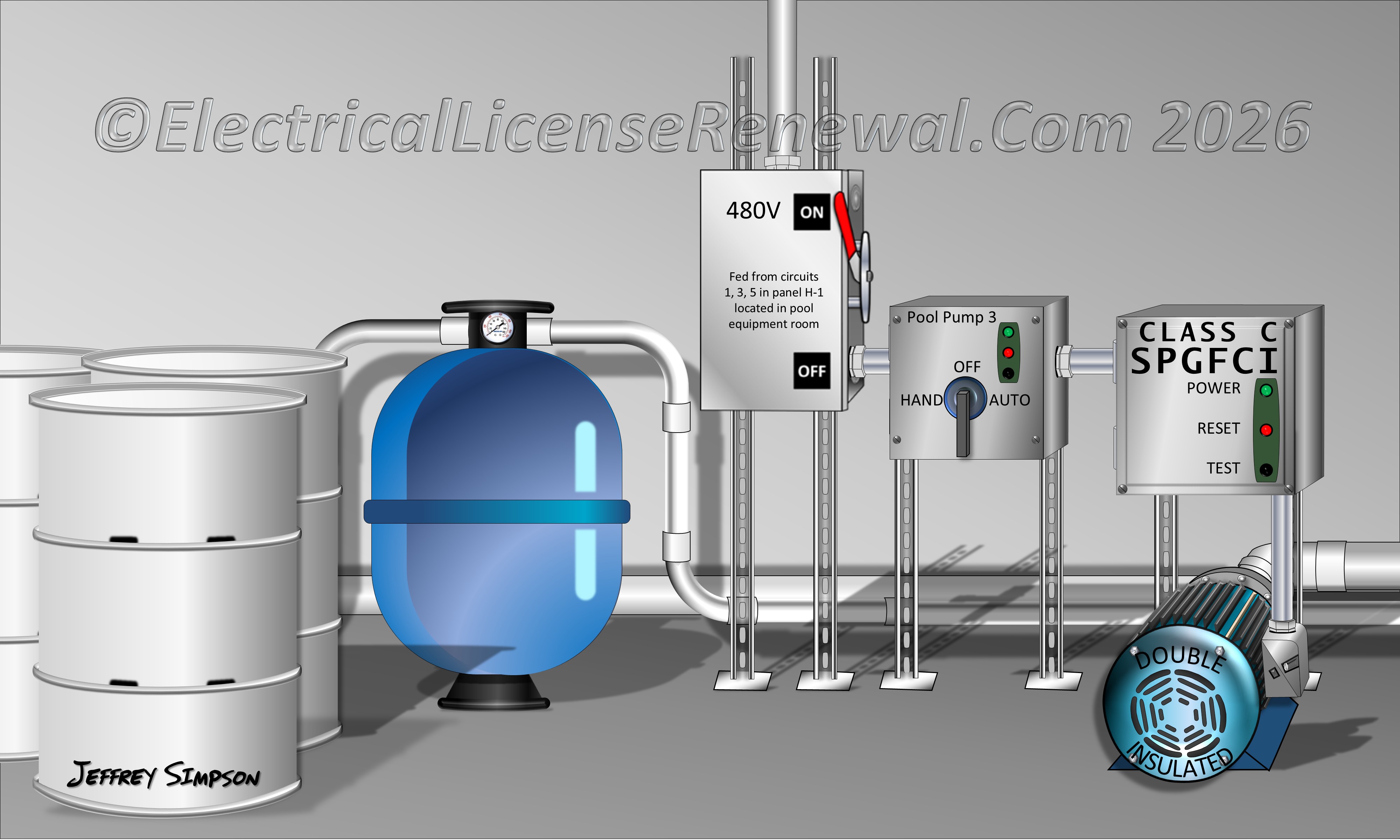
Class C SPGFCI is designed for systems where no conductor exceeds 300 volts ac to ground where reliable equipment grounding or double insulation is provided.
Code Change Summary: Revisions and new definitions pertaining to Special Purpose Ground-Fault Circuit Interrupters.
SME commentary: In the 2026 edition of the National Electrical Code, Article 100 saw a revision to the existing definition of Special Purpose Ground-Fault Circuit Interrupter (SPGFCI) and introduced three brand-new definitions for SPGFCI Classes C, D, and E. This change aligns the NEC® more closely with UL 943C, the Outline of Investigation for Special Purpose Ground-Fault Circuit Interrupters, and provides much-needed clarity for field applications across a broader voltage range.
Previously, the definition of SPGFCI in Article 100 was too narrow and failed to reflect the way these devices are described and classified in UL 943C. More importantly, the old definition didn’t accommodate applications operating below 150 volts to ground, which left a sizable gray area for certain installations that still required ground-fault protection but didn’t fit the mold of a traditional Class A GFCI.
The scope of UL 943C makes it clear that the standard covers GFCI’s where the voltage to ground is greater than 150 volts and equipment grounding or double insulation is required by the code, or where the voltage to ground is 150 volts or less and equipment grounding or double insulation is provided but the use of a Class A GFCI is not practical.
The revised 2026 definition is now more inclusive and simply states that Special Purpose Ground-Fault Circuit Interrupter (SPGFCI) is a term used to refer to Classes C, D, and E devices. Simple, concise, and to the point, while pointing the user to where the real meat of the definitions now resides.
To support this shift, the Code introduces three distinct classes of SPGFCIs, each with its own definition and application parameters:
Class C SPGFCI
This version is designed for systems where no conductor exceeds 300 volts ac to ground where reliable equipment grounding or double insulation is provided. The devices are designed to trip when ground-fault current is 20 mA or more, but do not trip below 15 mA.
New informational note 2 states that Class C ground-fault circuit interrupters are permitted to have a trip threshold greater than 6 mA but less than 15 mA which opens the door for some flexibility in trip thresholds while still providing limited let-go protection.
Class D SPGFCI
Class D is meant for applications where systems have one or more conductors over 300 volts to ground. These require specially sized, reliable grounding systems to limit voltage across the body to not more than 150 volts during a fault. Like Class C devices, Class D devices are designed to trip when ground-fault current is 20 mA or more and designed not to trip when ground-fault current is less than 15 mA, according to UL 943C.
Class E SPGFCI
Class E devices are for applications where systems have one or more conductors over 300 volts to ground and have conventional equipment grounding or double insulation for the protected equipment in the system. These devices are engineered to respond rapidly, cutting off power before current levels and duration can trigger ventricular fibrillation. Again, the performance window is 20 mA or more to trip, and designed not to trip when ground-fault current is less than 15 mA.
The takeaway for field professionals is simple: the NEC® has finally expanded the SPGFCI category to accommodate a wider range of voltage systems and different grounding strategies, all while keeping personnel protection as the top priority. The traditional 6 mA trip threshold of Class A GFCIs is not suitable for all equipment or environments. These newly defined classes provide solid code language where before, finding supporting NEC® language for the different classes would have proven difficult.
By aligning the NEC® definitions with UL 943C, this revision brings clarity, flexibility, and better safety coverage to industrial and specialized environments where Classes C, D, and E devices are appropriate.
Bottom line:
SPGFCIs are not a one-size-fits-all device. Properly defining Classes C, D, and E devices gives designers and installers the code language to match the protection to the application. Whether it's a 480V industrial circuit or a machine tool with double insulation, there's now a defined path forward in the NEC®.
Below is a preview of the NEC®. See the actual NEC® text at NFPA.ORG for the complete code section. Once there, click on their link to free access to the 2026 NEC® edition of NFPA 70.
2023 Code Language:
Article 100 Definitions.
Ground-Fault Circuit Interrupter, Special Purpose (SPGFCI). (Special Purpose Ground-Fault Circuit Interrupter). A device intended for the detection of ground-fault currents, used in circuits with voltage to ground greater than 150 volts, that functions to de-energize a circuit or portion of a circuit within an established period of time when a ground-fault current exceeds the values established for Class C, D, or E devices.
Informational Note: See UL 943C, Outline of Investigation for Special Purpose Ground-Fault Circuit Interrupters, for information on Classes C, D, or E special purpose ground-fault circuit interrupters.
2026 Code Language:
Article 100 Definitions.
Ground-Fault Circuit Interrupter, Special Purpose (SPGFCI). (Special Purpose Ground-Fault Circuit Interrupter). A term used to refer to Class C, Class D, and Class E devices.
Informational Note: See UL 943C, Outline of Investigation for Special Purpose Ground-Fault Circuit Interrupters, for information on Class C, Class D, and Class E SPGFCIs.
N Ground-Fault Circuit Interrupter, Special Purpose, Class C (Class C SPGFCI). (Class C Special Purpose Ground-Fault Circuit Interrupter). A device intended for the protection of personnel that functions to de-energize a circuit or portion thereof within an established period of time when a ground-fault current exceeds the values established for a Class C device. It is intended to be used in circuits with no conductor over 300 volts ac to ground where reliable equipment grounding or double insulation is provided.
Informational Note No. 1: See UL 943C, Outline of Investigation for Special-Purpose Ground-Fault Circuit-Interrupters. Class C ground-fault circuit interrupters trip when the ground-fault current is 20 mA or higher and do not trip when the ground-fault current is less than 15 mA.
Informational Note No. 2: To provide limited-let-go protection, Class C ground-fault circuit interrupters are permitted to have a trip threshold greater than 6 mA but less than 15 mA.
N Ground-Fault Circuit Interrupter, Special Purpose, Class D (Class D SPGFCI). (Class D Special Purpose Ground-Fault Circuit Interrupter). A device intended for the protection of personnel that functions to de-energize a circuit or portion thereof within an established period of time when a ground-fault current exceeds the values established for a Class D device. It is intended to be used in circuits with one or more conductors over 300 volts to ground and with specially sized reliable grounding to provide a low impedance path so that the voltage across the body during a fault does not exceed 150 volts.
Informational Note: See UL 943C, Outline of Investigation for Special-Purpose Ground-Fault Circuit interrupters. Class D ground-fault circuit interrupters trip when the ground-fault current is 20 mA or higher and do not trip when the ground-fault current is less than 15 mA.
N Ground-Fault Circuit Interrupter, Special Purpose, Class E (Class E SPGFCI). (Class E Special Purpose Ground-Fault Circuit Interrupter). A device intended for the protection of personnel that functions to de-energize a circuit or portion thereof within an established period of time when a ground-fault circuit exceeds the values established for a Class E device. It is intended to be used in circuits with one or more conductors over 300 volts to ground and with conventional equipment grounding or double insulation provided for the protected equipment in the system. These devices respond rapidly to open the circuit before the magnitude and duration of the current flowing through the body exceeds the limits for ventricular fibrillation.
Informational Note: See UL 943C, Outline of Investigation for Special-Purpose Ground-Fault Circuit Interrupters. Class E ground-fault circuit interrupters trip when the ground-fault current is 20 mA or higher and do not trip when the ground-fault current is less than 15 mA.
