Article 100 Definitions. Dormitory.
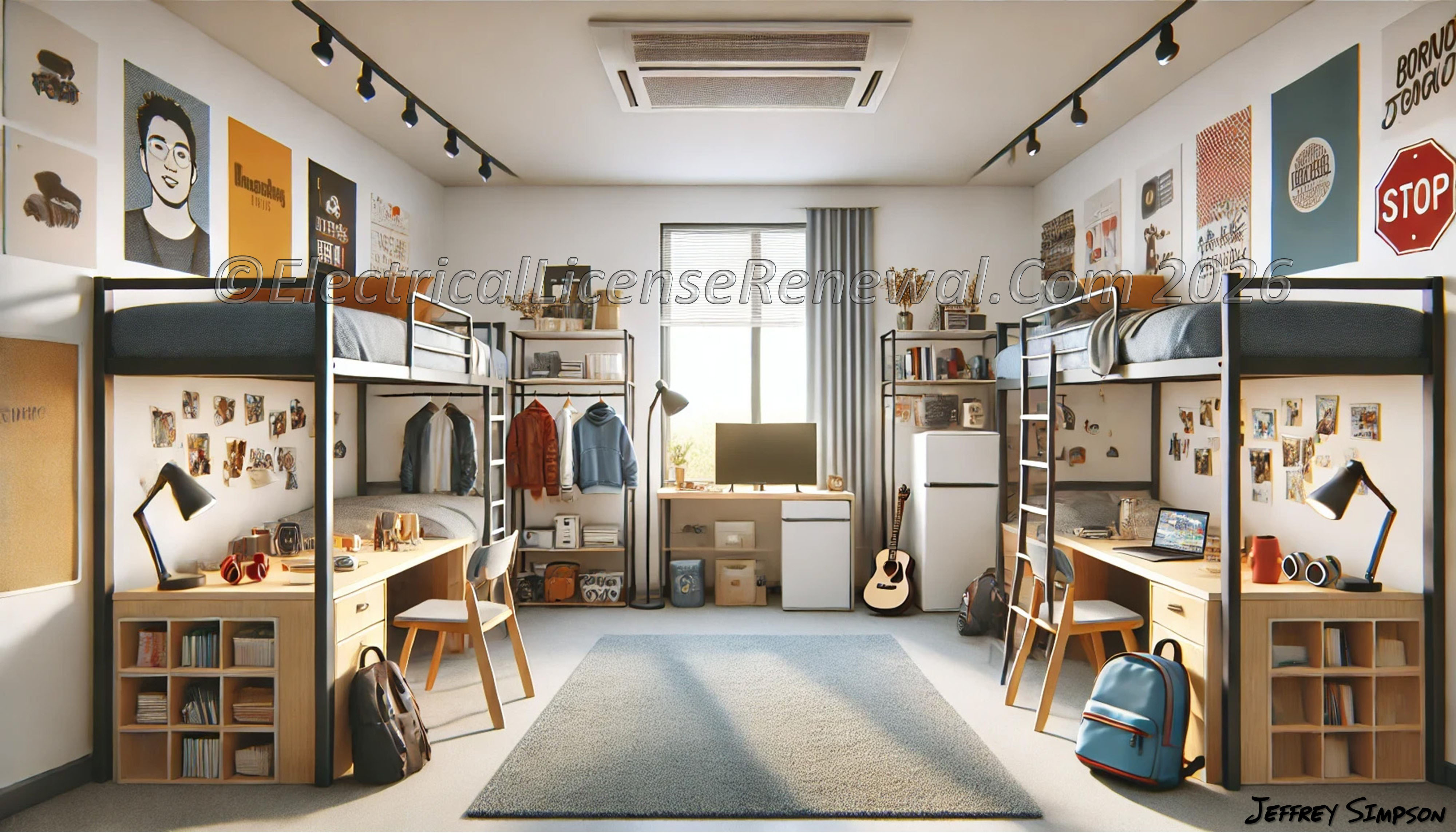
The average dorm room (whether it houses one or two students) is still subject to NEC requirements for areas like bedrooms and living rooms. Those spaces are now correctly treated as “guest rooms” or “guest suites” within a dormitory occupancy, similar to a hotel or military barracks.
Code Change Summary: "Dormitory Unit" was changed to "Dormitory", and a new informational note provides examples to clarify what is considered a dormitory.
SME commentary: This change addresses an ongoing source of confusion in the field. Previously, the NEC® defined a "dormitory unit" using wording extracted from NFPA 101, but the way it was presented left electricians, inspectors, and engineers unsure whether it referred to an individual student room within the dormitory or the entire dormitory building.
The previous and current definition includes language like “group sleeping accommodations are provided for more than 16 persons…”, which some may misread to mean that only rooms housing 17 or more people require protection, effectively exempting most individual dorm rooms from AFCI, GFCI, and other protective measures. Obviously, this isn’t the intent.
Now in 2026, the term is just “Dormitory” which is still “A building or a space in a building in which group sleeping accommodations are provided for more than 16 persons who are not members of the same family in one room, or a series of closely associated rooms, under joint occupancy and single management, with or without meals, but without individual cooking facilities.”
The combination of the revised term “Dormitory” plus the new accompanying informational note below provides the needed clarity:
Informational note: "Rooms within dormitories intended for the use of individuals for combined living and sleeping purposes are guest rooms or guest suites. Examples of dormitories are college dormitories, fraternity and sorority houses, and military barracks.”
In plain terms: The average dorm room (whether it houses one or two students) is still subject to NEC® requirements for areas like bedrooms and living rooms. Those spaces are now correctly treated as “guest rooms” or “guest suites” within a dormitory occupancy, similar to a hotel or military barracks.
This small title change has big impact in that it ensures GFCI, AFCI, and other protections are properly applied to every dorm room, not just to massive bunkhouses holding 17 or more students in one big room. (See changes in 210.17 and 210.60).
It also brings the NEC® into better alignment with NFPA 101 (Life Safety Code), avoiding discrepancies between codes that were causing interpretation headaches across the country.
Bottom line for electricians:
When wiring an individual room inside a dormitory building, yes, even a single room for one student should be treated like a guest room under the NEC®. AFCI and GFCI protection should be applied just like any other sleeping/living area.
Below is a preview of the NEC®. See the actual NEC® text at NFPA.ORG for the complete code section. Once there, click on their link to free access to the 2026 NEC® edition of NFPA 70.
2023 Code Language:
Article 100 Definitions.
Dormitory Unit. A building or a space in a building in which group sleeping accommodations are provided for more than 16 persons who are not members of the same family in one room, or a series of closely associated rooms, under joint occupancy and single management, with or without meals, but without individual cooking facilities.
2026 Code Language:
Article 100 Definitions.
Dormitory. A building or a space in a building in which group sleeping accommodations are provided for more than 16 persons who are not members of the same family in one room, or a series of closely associated rooms, under joint occupancy and single management, with or without meals, but without individual cooking facilities.
Informational Note: Rooms within dormitories intended for the use of individuals for combined living and sleeping purposes are guest rooms or guest suites. Examples of dormitories are college dormitories, fraternity and sorority houses, and military barracks. [101:A.3.3.68]
