480.9 Battery Locations.
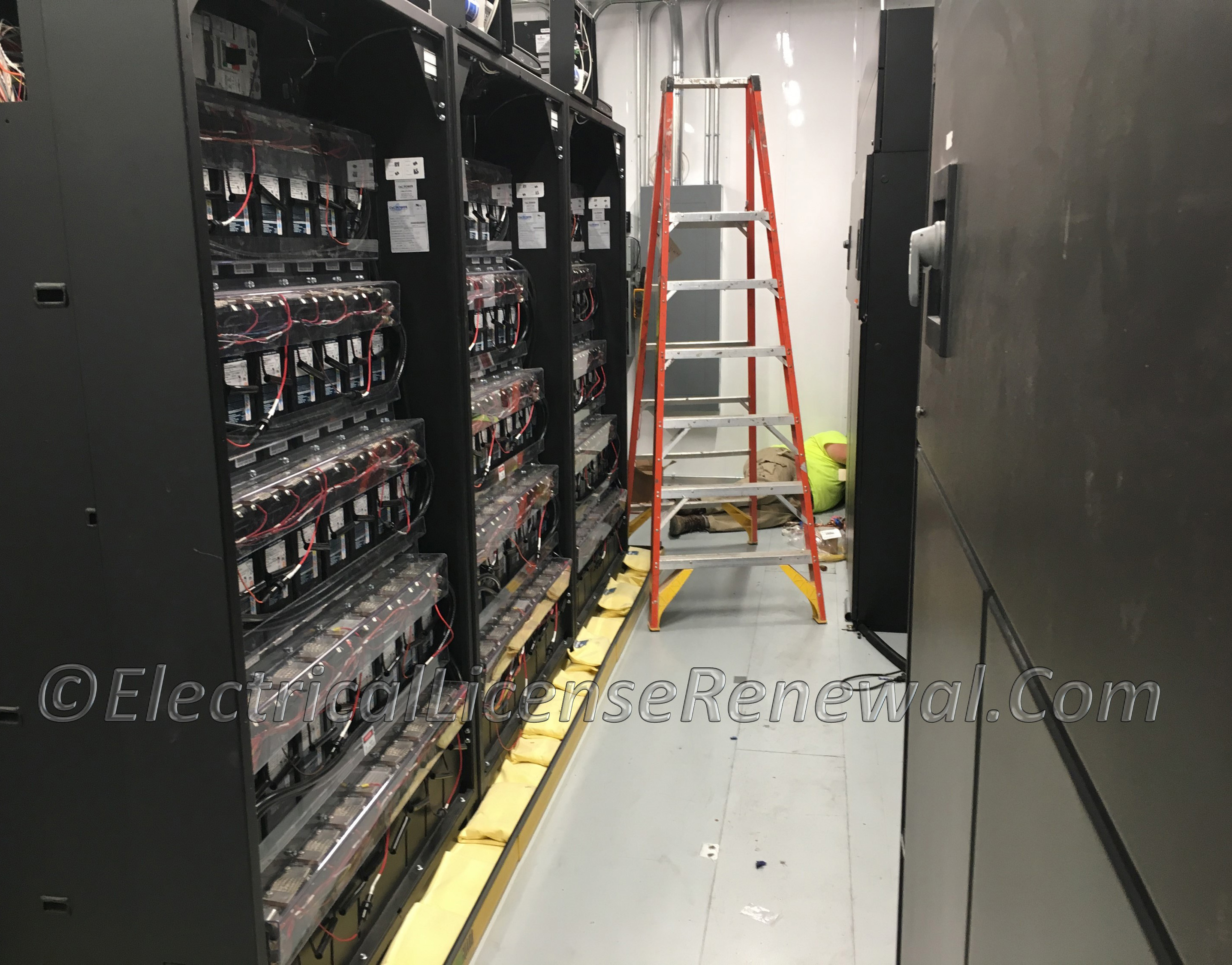
Code Change Summary: Many new requirements were added for battery locations in 480.9.
As battery technology changes, so does the need to modify the rules pertaining to batteries in the NEC®.
The previous code language gave a general requirement for ventilation. The new 2014 code language is based on the understanding that not all batteries require ventilation or produce the same levels of gas. Now, the ventilation must be appropriate for the type of battery used or for the battery technology involved.
As well, now proper egress has been addressed. Section 480.9(E) requires any personnel doors intended for entrance to, and egress from a battery room, to open in the direction of egress and be equipped with listed panic hardware.
Below is a preview of the NEC®. See the actual NEC® text at NFPA.ORG for the complete code section. Once there, click on the “free access” tab and select the applicable year of NFPA 70 (National Electrical code).
2011 Code language:
480.9 Battery Locations. Battery locations shall conform to 480.9(A), (B), and (C).
(A) Ventilation. Provisions shall be made for sufficient diffusion and ventilation of the gases from the battery to prevent the accumulation of an explosive mixture.
(B) Live Parts. Guarding of live parts shall comply with 110.27.
(C) Working Space. Working space about the battery systems shall comply with 110.26. Working clearance shall be measured from the edge of the battery rack.
2014 Code Language including the Errata:
480.9 Battery Locations. Battery locations shall conform to 480.9(A), (B), and (C).
(A) Ventilation. Provisions appropriate to the battery technology shall be made for sufficient diffusion and ventilation of gases from the battery, if present, to prevent the accumulation of an explosive mixture.
(B) Live Parts. Guarding of live parts shall comply with 110.27.
(C) Spaces About Battery Systems. Spaces about battery systems shall comply with 110.26. Working space shall be measured from the edge of the battery cabinet, racks, or trays.
For battery racks, there shall be a minimum clearance of 25 mm (1 in.) between a cell container and any wall or structure on the side not requiring access for maintenance. Battery stands shall be permitted to contact adjacent walls or structures, provided that the battery shelf has a free air space for not less than 90 percent of its length.
(D) Top Terminal Batteries. Where top terminal batteries are installed on tiered racks, working space in accordance with the battery manufacturer’s instructions shall be provided between the highest point on a cell and the row or ceiling above that point.
(E) Egress. A personnel door(s) intended for entrance to, and egress from, rooms designated as battery rooms shall open in the direction of egress and shall be equipped with listed panic hardware.
Did You Like This? Let Us Know With A Like! Thanks!
480.9 Battery Locations.
Below is a Real Question from our Electrical Continuing Education Courses for Electrical License Renewal:Which of the following is required for top terminal batteries installed on tiered racks?
| Please register or sign in for electrical continuing education courses. If you were already signed in, your session probably expired, please sign back in. |